
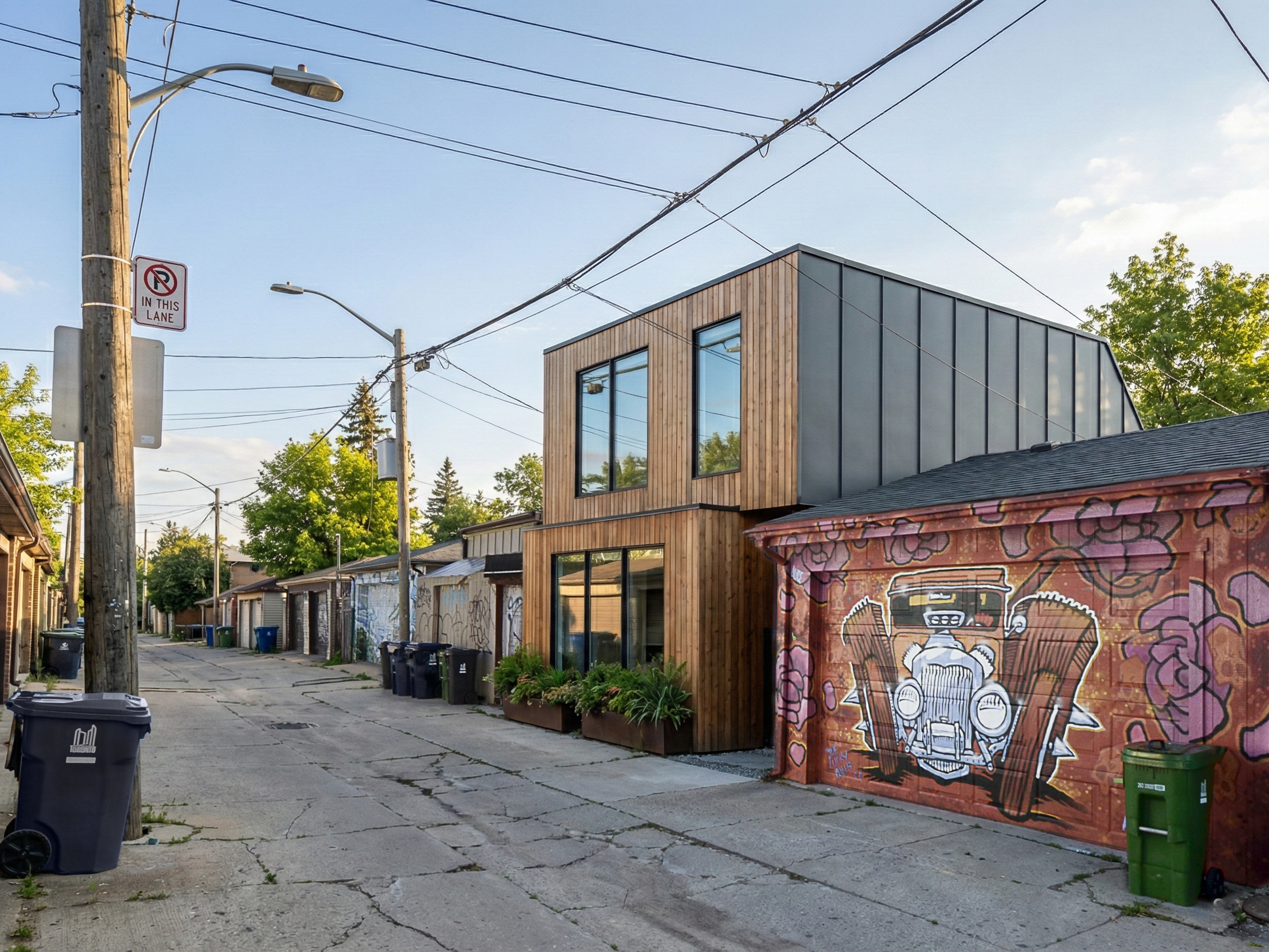
Toronto Laneway Research: High Performance Laneway Living
The T1 Prototype
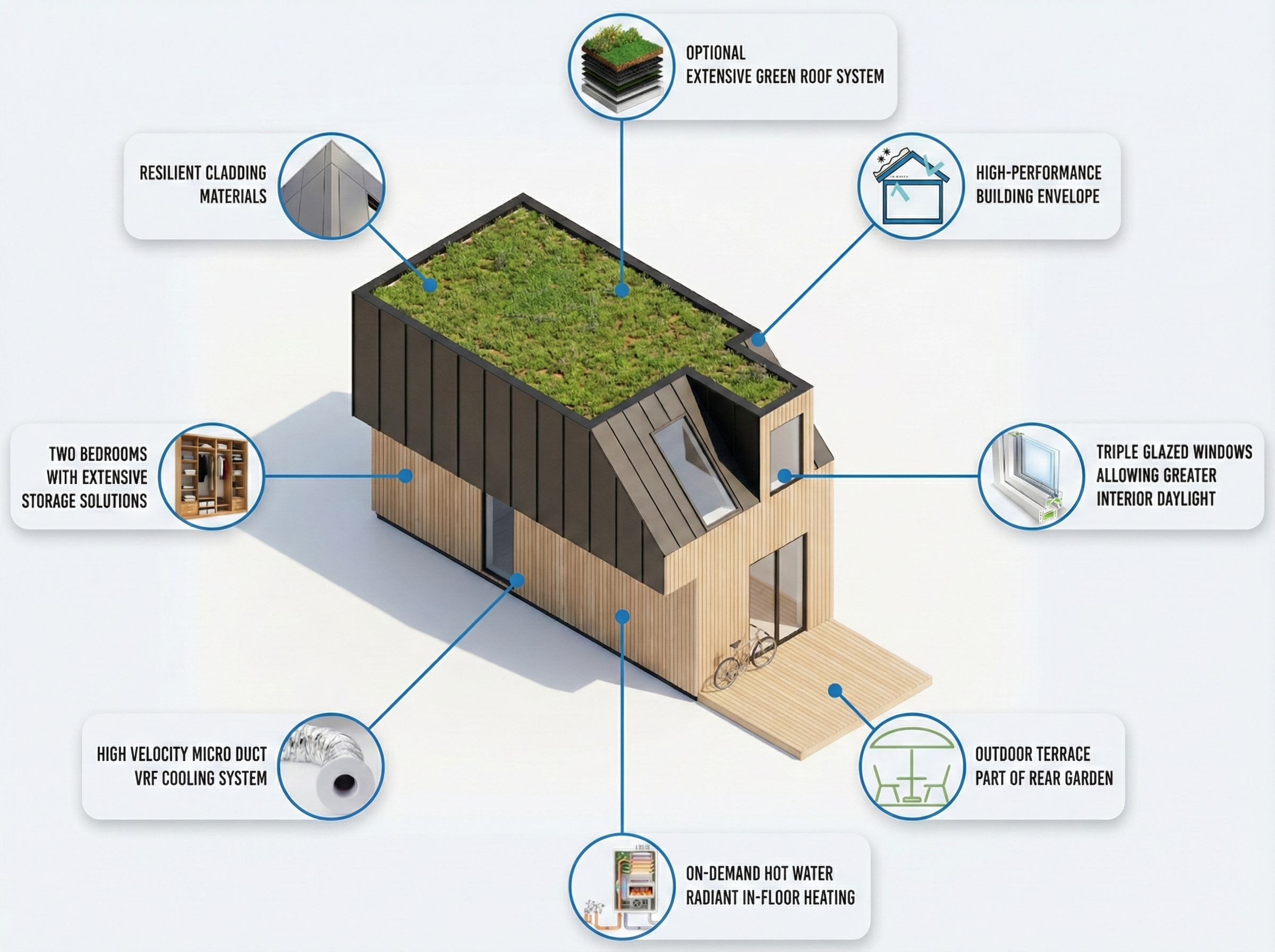
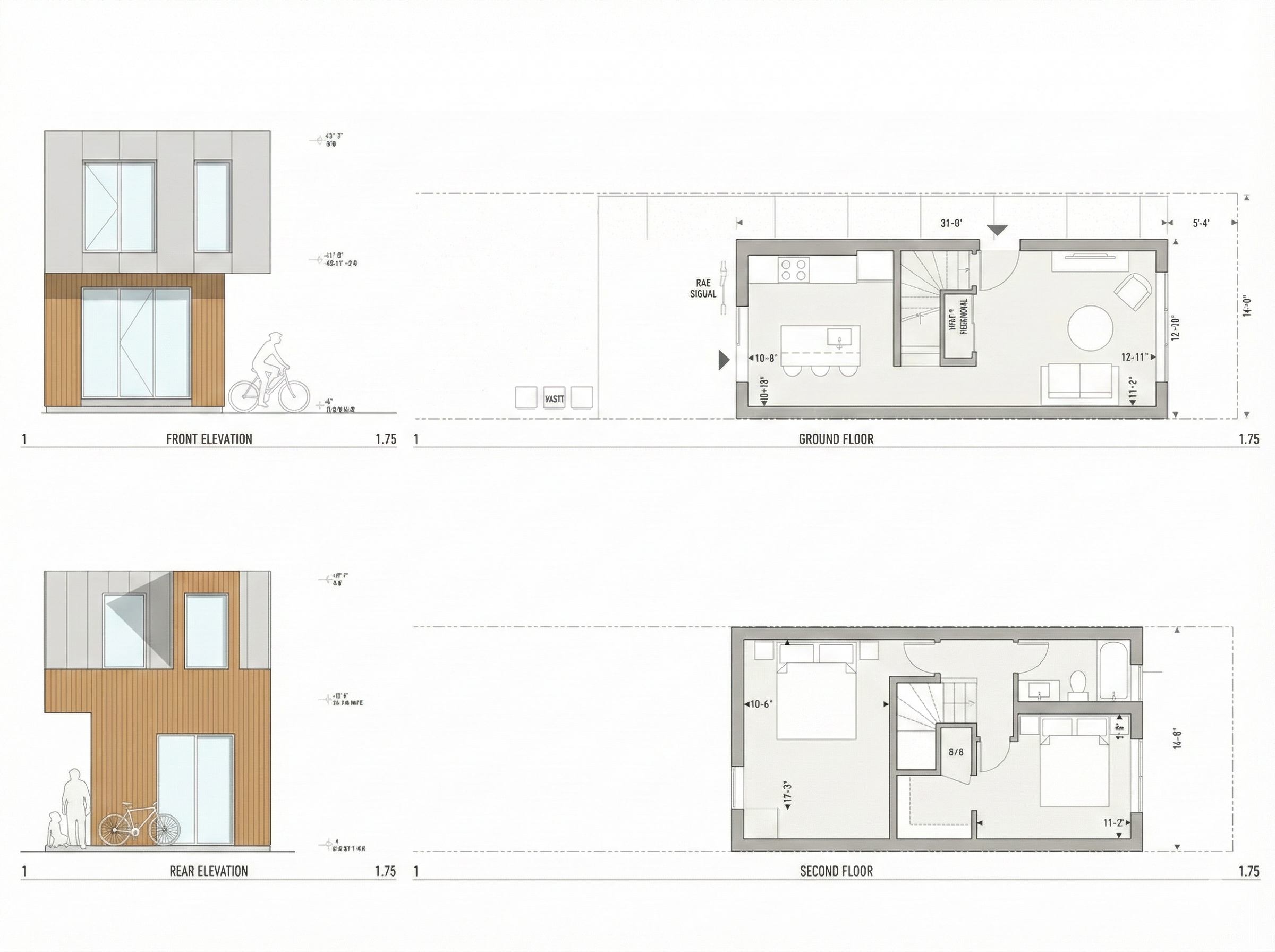
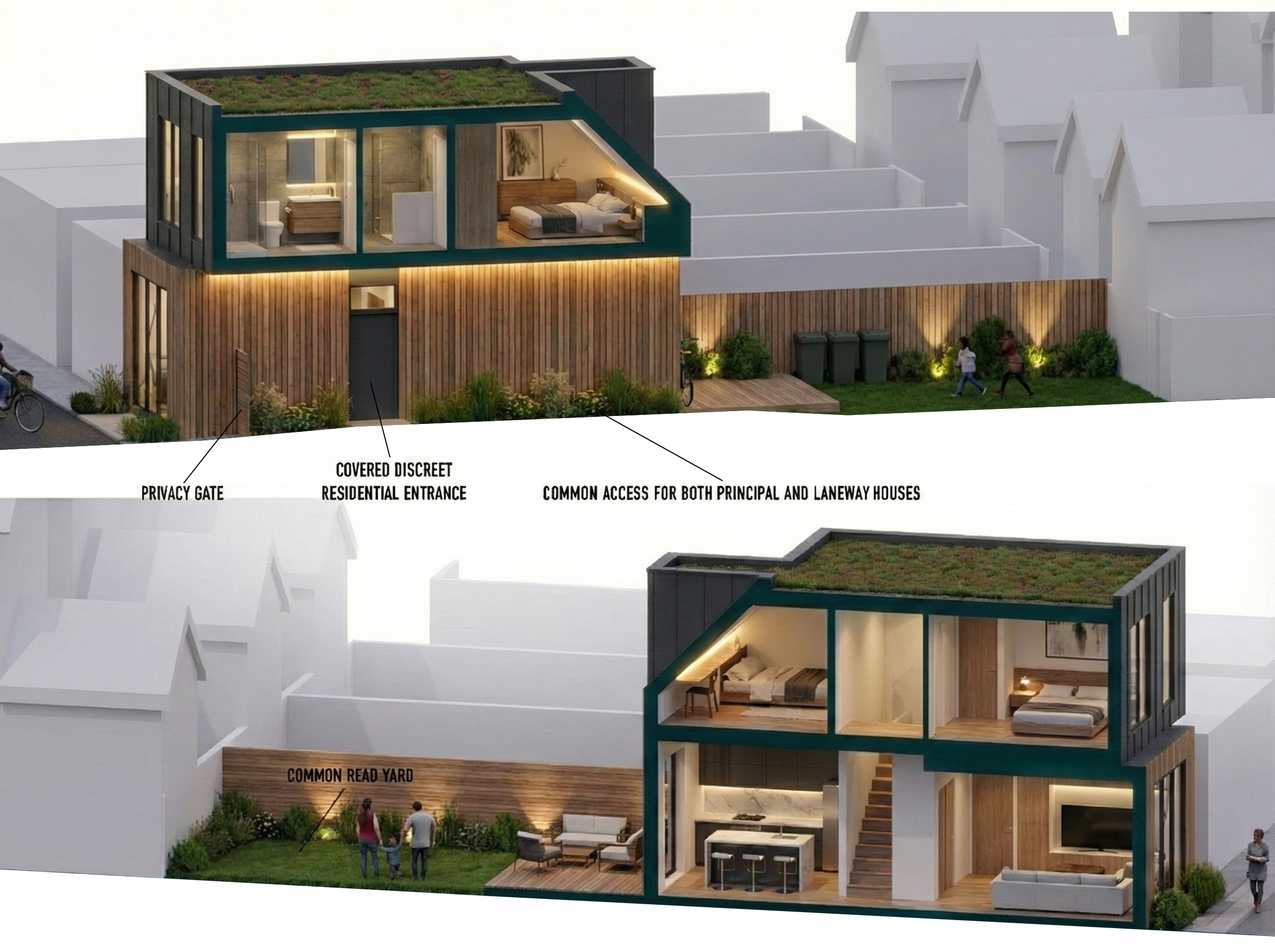

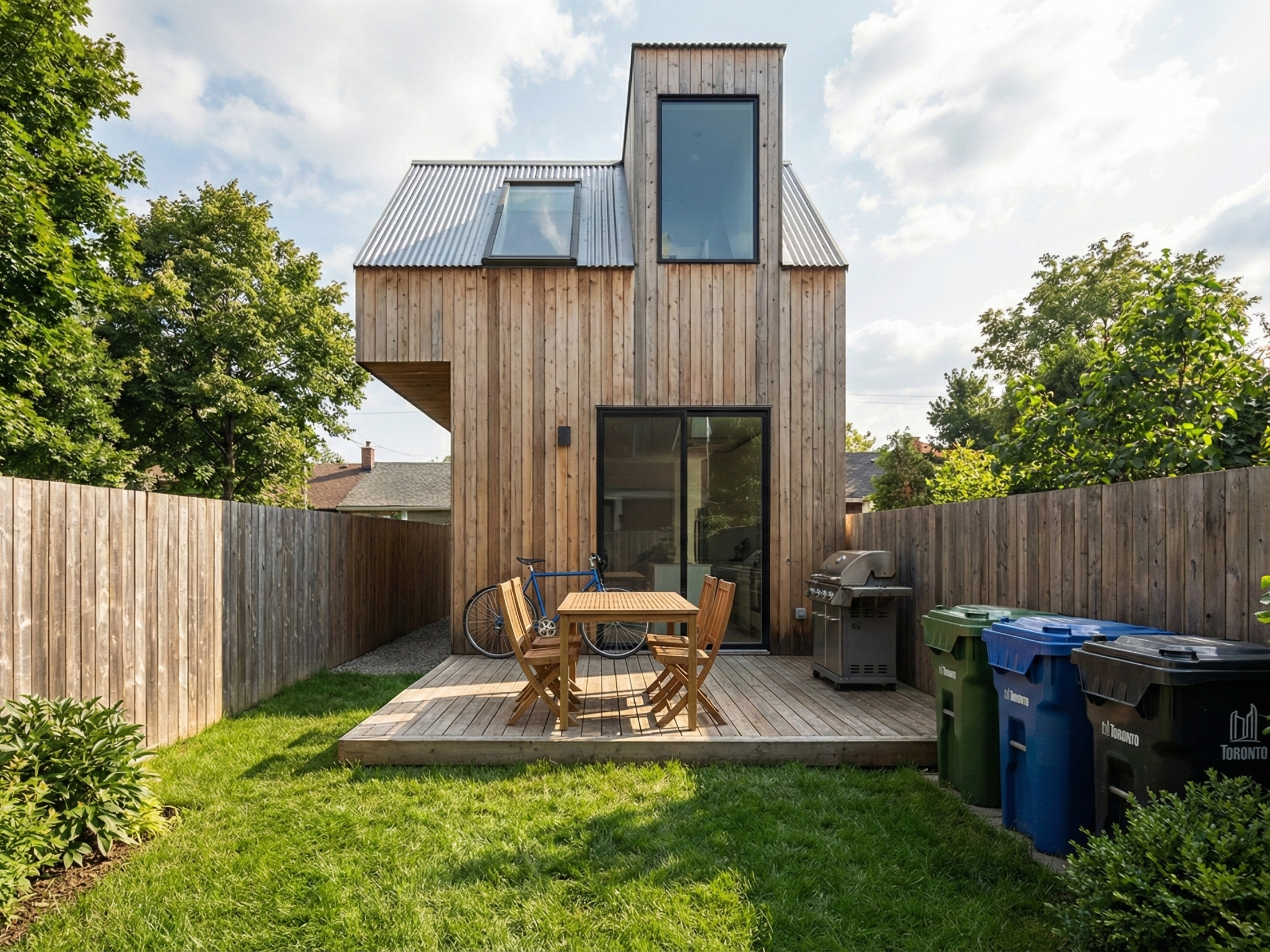
Project Stats
Lot Context: Minimum 16'-0" Width
Total Area: 875 sq. ft. (404 sq. ft. Ground / 471 sq. ft. Upper)
Program: 2 Bedrooms, 1 Bath, Open Concept Living
Key Features: Green Roof, Triple Glazing, Radiant Heat
The Challenge: Unlocking Toronto’s Hidden Density In a city where buildable land is scarce, the solution often lies in our backyards. The T1 Laneway Study was developed as a direct response to Toronto’s changing zoning bylaws. The goal was not just to squeeze a house into a tight 16-foot lot, but to create a standalone home that refuses to compromise on light, privacy, or building performance.
The Design Solution: Navigating the Angular Plane Designing for Toronto’s laneways means mastering the "angular plane"—the zoning rules that dictate building height to protect neighbors' sunlight.
Sculpted Massing: The T1’s distinct sloped roof isn't just an aesthetic choice; it is a direct response to zoning setbacks, allowing us to maximize second-floor volume while remaining compliant.
Privacy in Density: A common fear with laneway housing is the loss of privacy. We mitigated this by orienting the primary glazing toward the lane and the sky (via skylights) rather than overlooking the main house’s backyard. A discrete "Privacy Gate" and shared path system ensure the main house and the suite function independently.
The Maker’s Mindset: Built to Perform As a Design-Build studio, we look beyond the floor plan to the building envelope. A laneway house has four exposed walls and a roof, making thermal performance critical.
The Envelope: The design specifies a high-performance envelope with resilient cladding and triple-glazed windows, ensuring the home is quiet and energy-efficient despite the urban setting.
Systems Integration: We designed the mechanicals to be invisible but effective. The plan integrates high-velocity micro-duct VRF cooling and on-demand radiant in-floor heating, eliminating bulky bulkheads and cold spots.
Sustainability: The proposal includes an optional extensive green roof system to manage stormwater and reduce the heat island effect—details that matter in dense concrete alleyways.